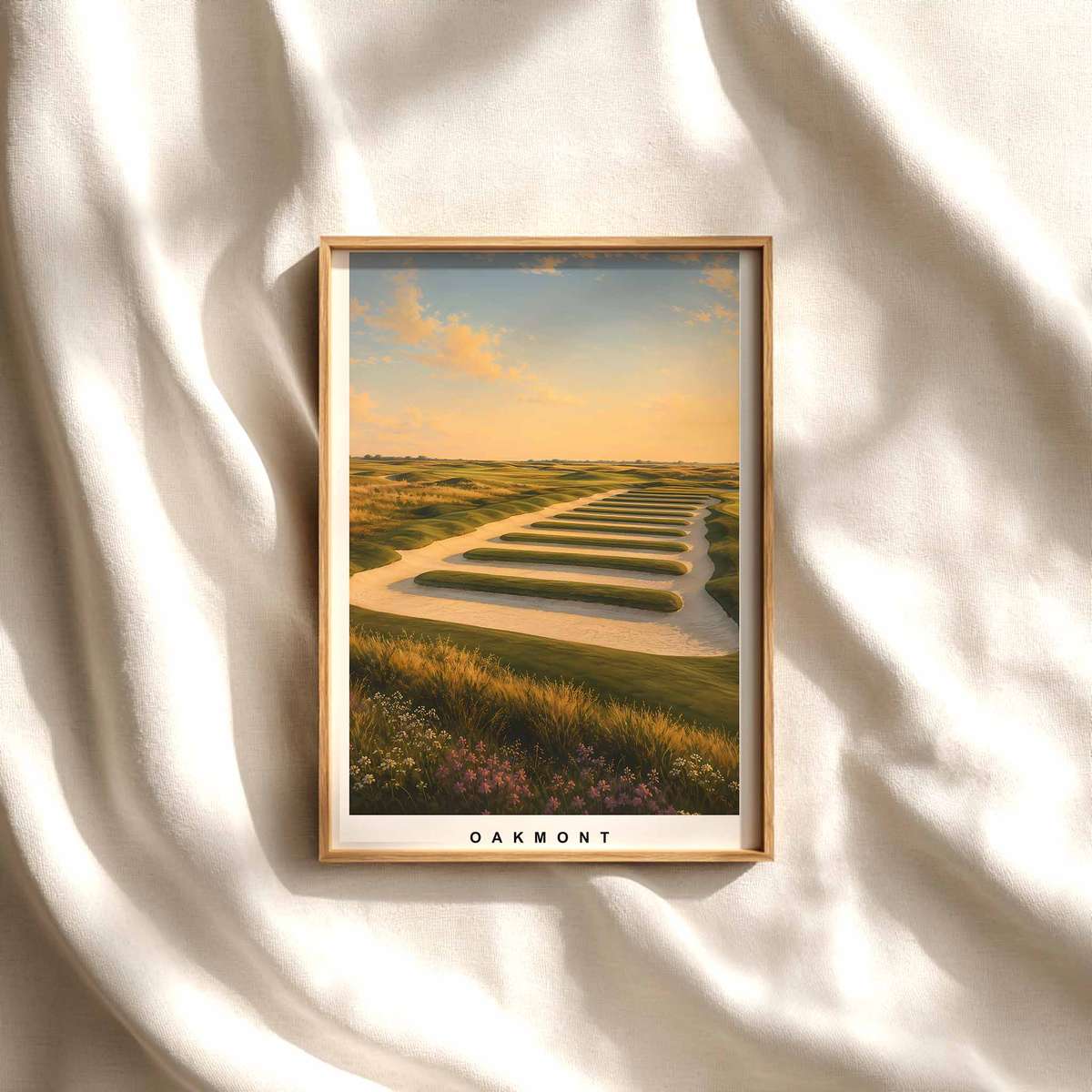
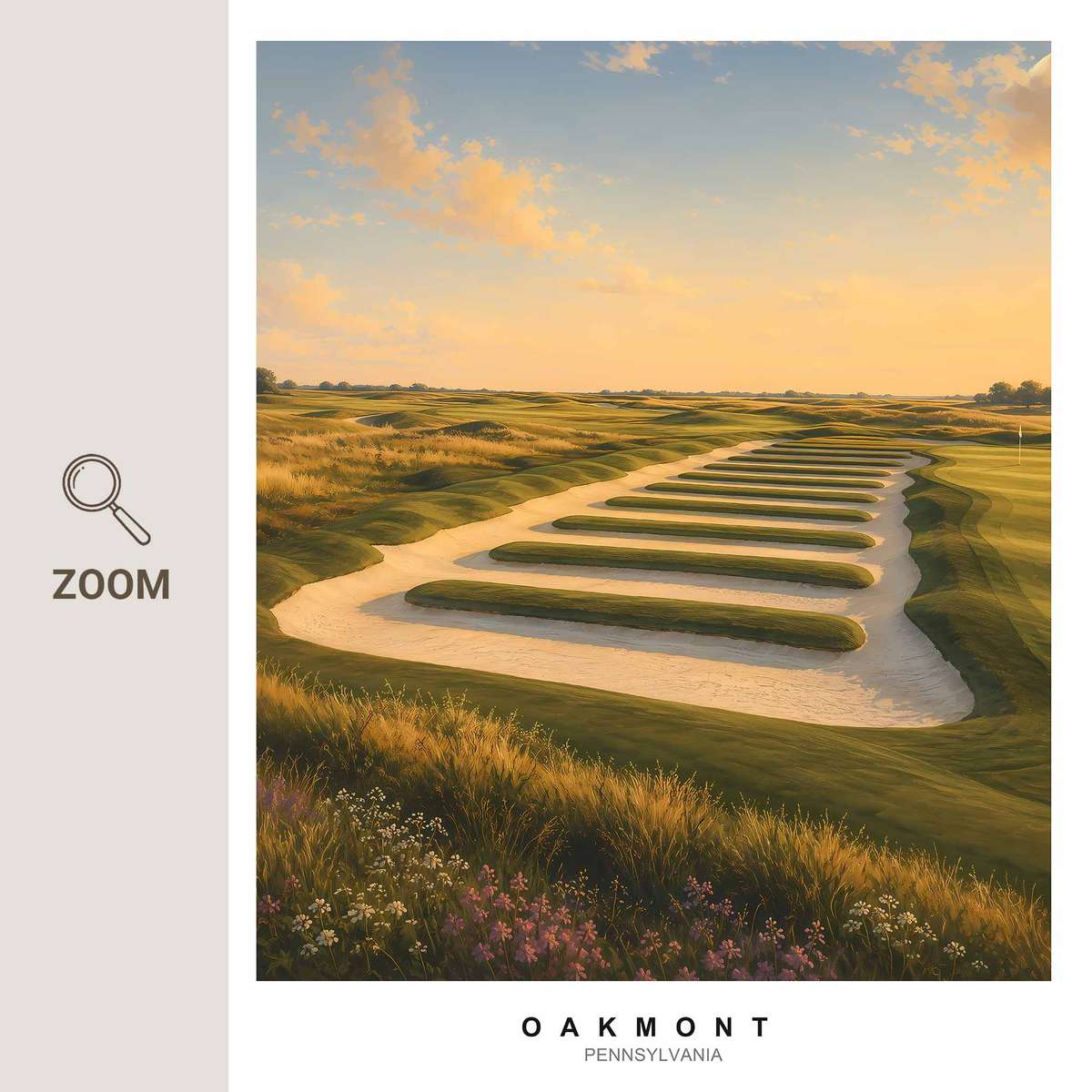
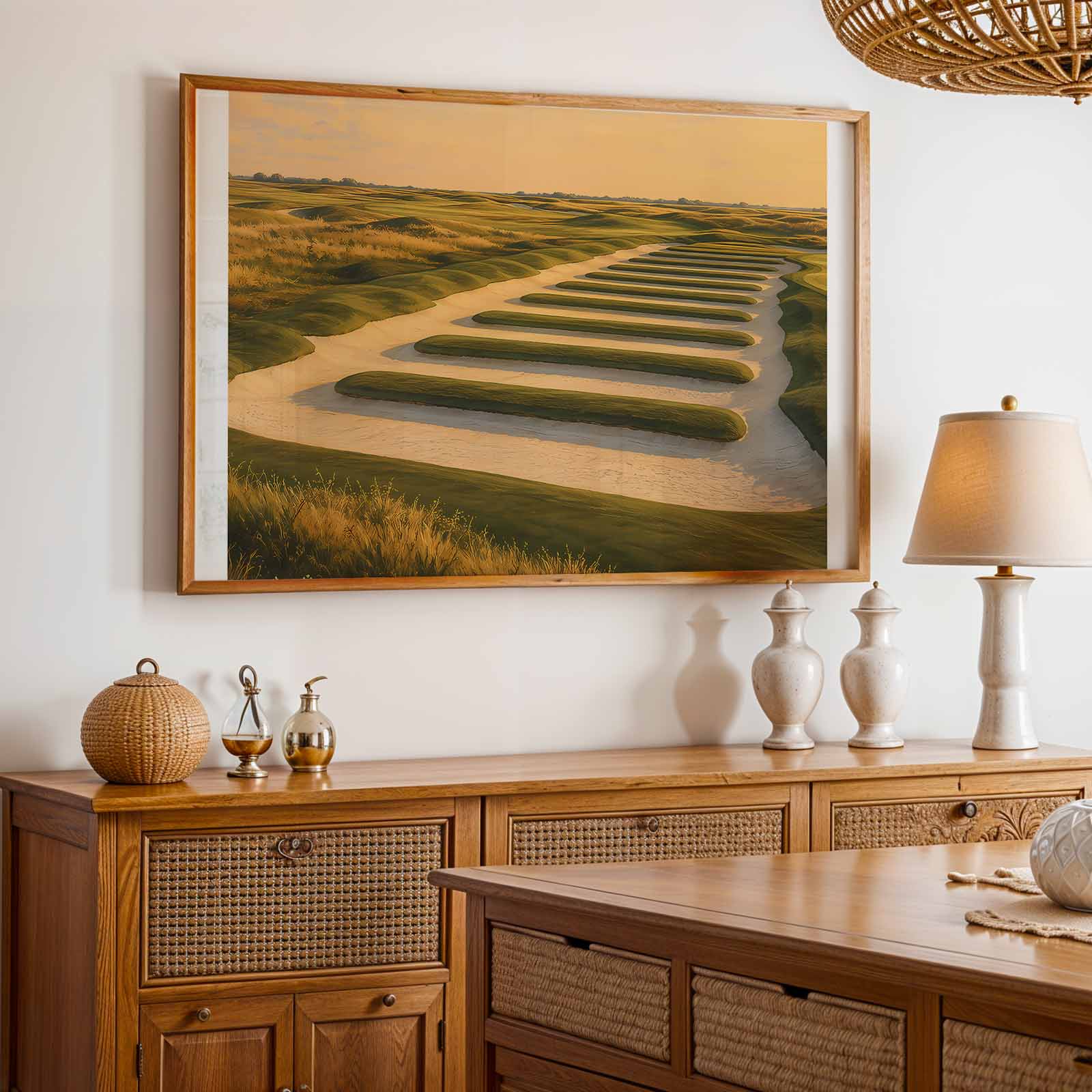
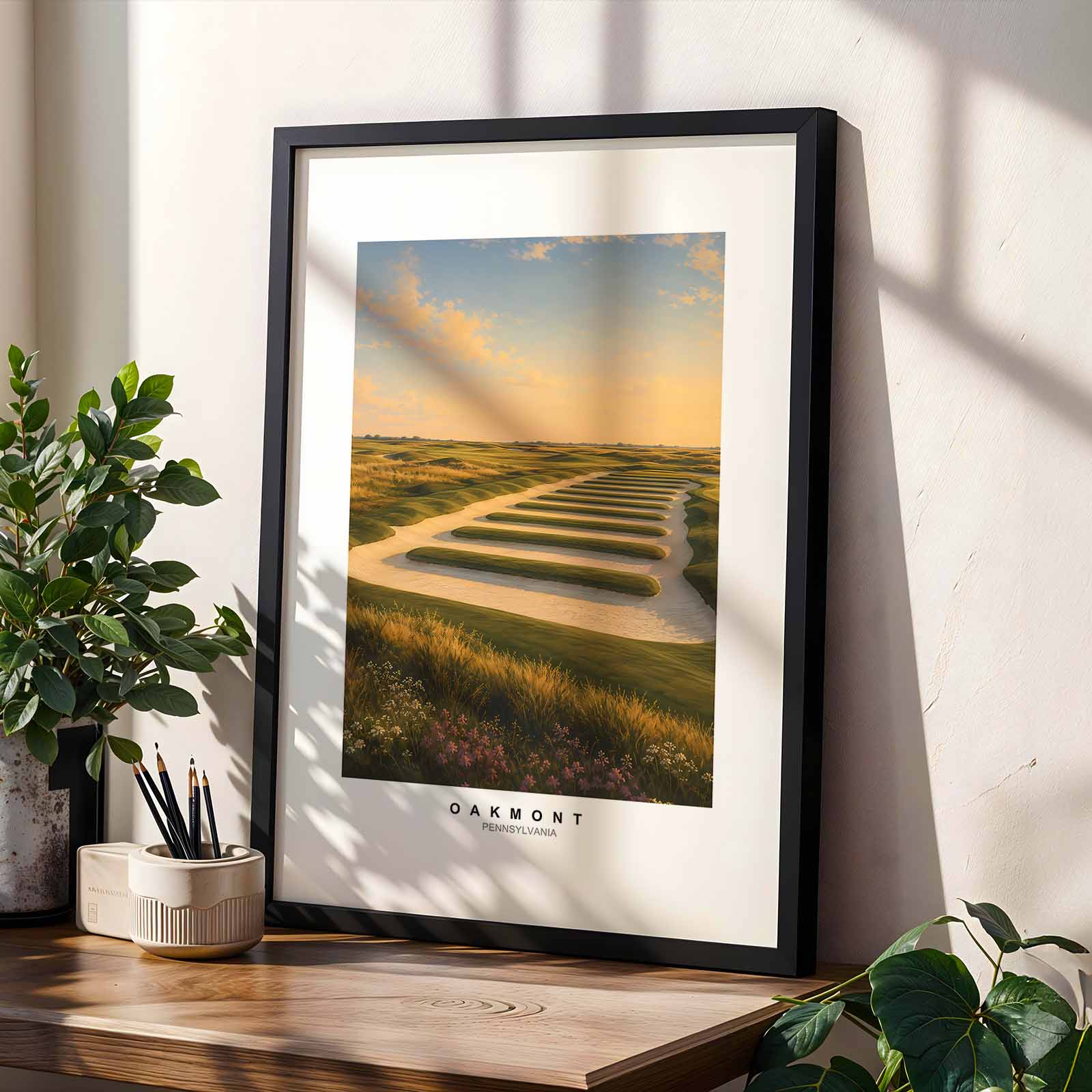
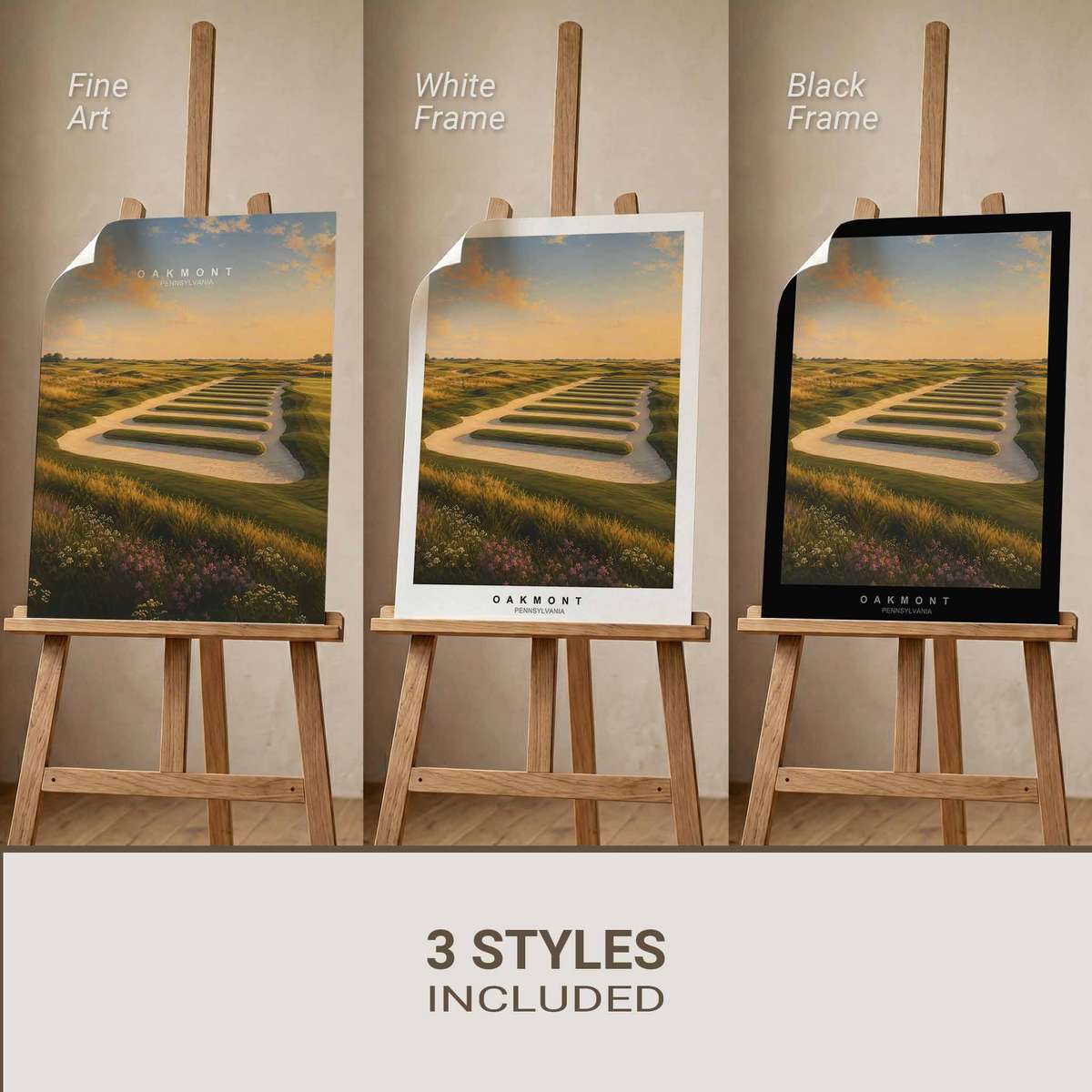
There is a particular language to Oakmont Country Club imagery: austere fairways, sharply incised bunkers and a severity that reads at once disciplined and quietly noble. When translated into a framed print, that language becomes an interior cue—an invitation to a room shaped by restraint, slow focus and the heritage of the game rather than spectacle. In a study, home office, library or clubhouse lounge, such a print does more than decorate a wall; it defines a mood of controlled calm.
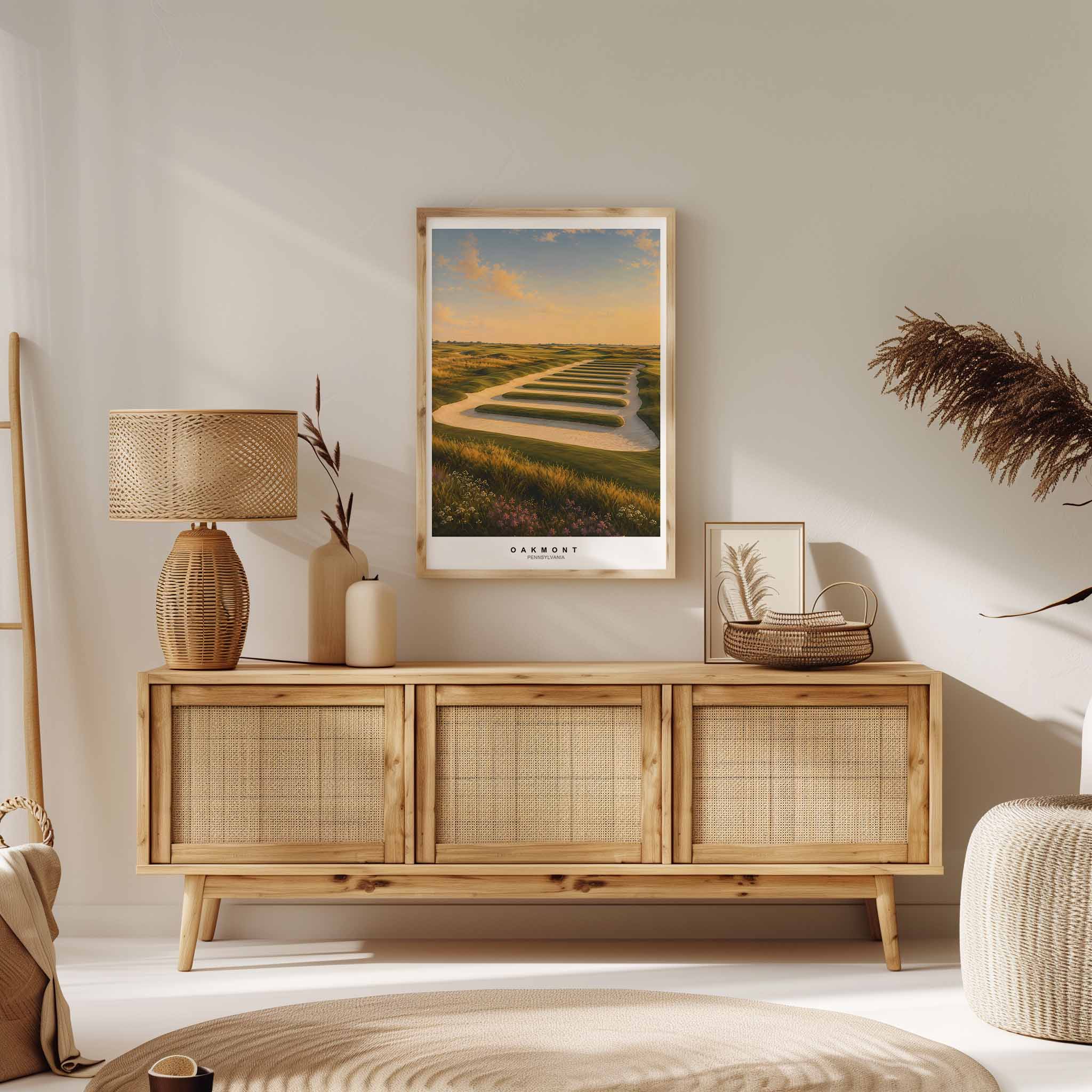
Placed above a leather-backed armchair, over a dark-stained credenza, or beside a row of well-thumbed golf volumes, Oakmont prints work with material textures to extend their story. The chalky greens and deep bunker shadows harmonize with walnut, oak and burnished brass. Leather tones from a club chair or a desk blotter echo the print’s muted warmth, while shelves of books and a single sculptural lamp reinforce the contemplative atmosphere. The result is a room that feels curated rather than staged: lived-in, deliberate and quietly confident.
[IMAGE_INSERT_ARTICLE_01]
What makes these images especially effective for clubhouse-leaning interiors is their economy. Oakmont’s visual vocabulary is spare—long horizontal lines, abrupt sand shapes, and an almost editorial discipline in framing. That sparseness translates beautifully when the aim is sophistication over showiness. A single, large-scale print can anchor a room so that every other choice—rug, lamp, side table—reads as accompaniment rather than competition. The aesthetic is less about action and more about provenance, a nod to golf’s rituals and the measured patience it requires.
Beyond materials and composition, Oakmont-themed prints carry cultural signals useful to interior identity. They suggest membership in a tradition: afternoons spent discussing lines of play, an appreciation for rules and the quiet pleasures of a well-kept course. For the professional furnishing a study or an executive seeking a clubhouse tone in an office, the print operates as a soft credential. It speaks to seriousness without sermonizing, to taste informed by history rather than trend-chasing.
Consider the audience for whom this imagery feels most resonant. It appeals to those who prize understatement—collectors of books, owners of bespoke furniture, people who prefer conversation to spectacle. It suits rooms intended for reflection: a private study where strategy is conceived, a library where stories are stored, or a clubhouse corner where members settle into long, measured exchanges. In these contexts, the print is less a focal showpiece and more a companion piece that deepens the room’s character.
Finally, the emotional economy of Oakmont prints is a quiet masterstroke. The marked bunkers and the impression of severity create a composed tension that calms rather than excites. This paradox—images that feel austere yet comforting—makes them ideal for spaces that require concentration and composure. They steady the eye and the mind, inviting the viewer to slow down and inhabit the room with purpose.
The best interiors treat golf artwork as part of an ongoing conversation between objects, light and memory. An Oakmont print, chosen with restraint and hung with care, becomes a statement of style: not flashy, but unmistakably refined. It reminds us that the gentlest kind of luxury is the one that allows silence, thought and a sense of belonging to flourish.


 ↧ Digital download
Best Gift for Golfers: Bethpage Black Golf Print as a Statement of...
Digital download
↧ Digital download
Best Gift for Golfers: Bethpage Black Golf Print as a Statement of...
Digital download
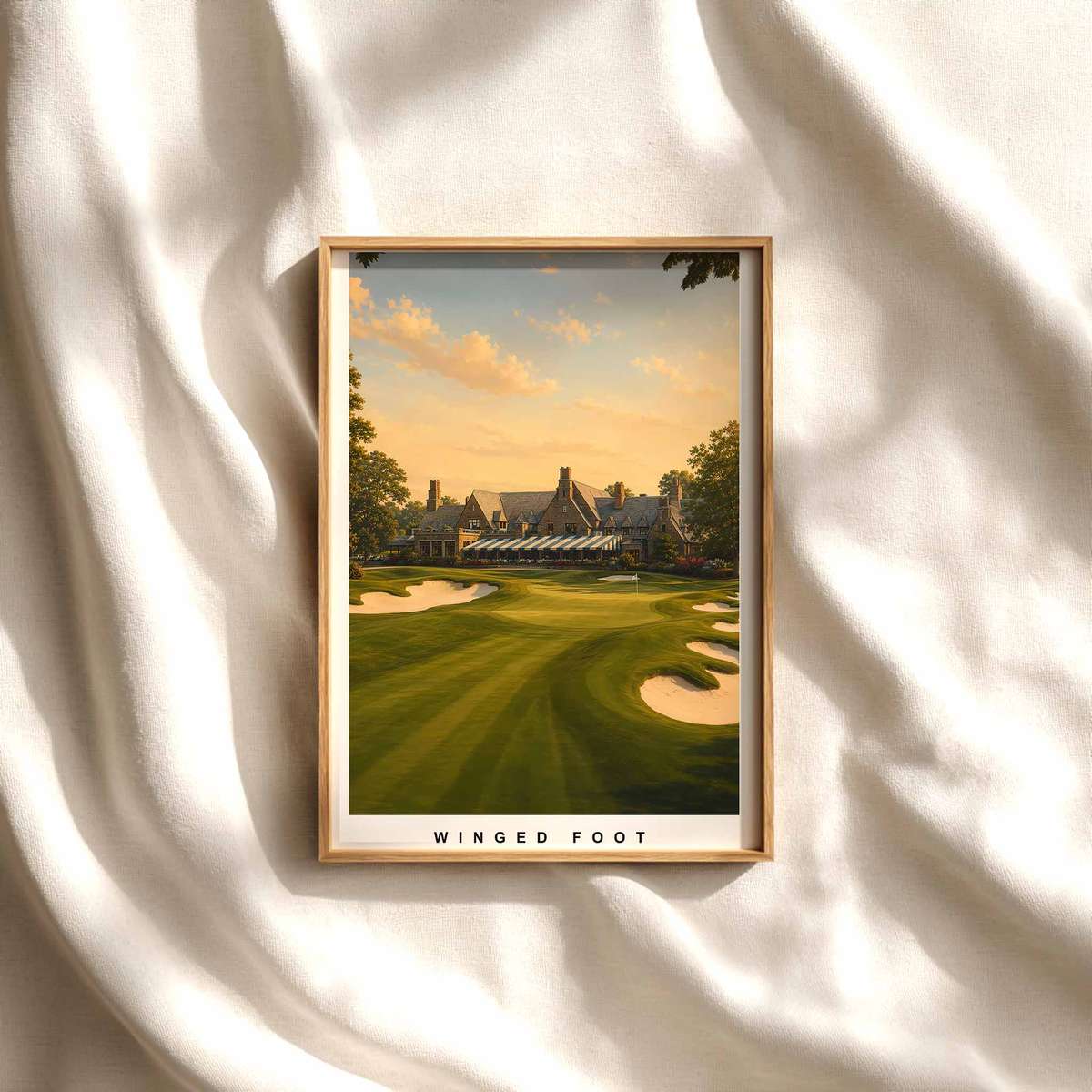 ↧ Digital download
Winged Foot West: Visual Gravity in Golfer-Led Wall Art
Digital download
↧ Digital download
Winged Foot West: Visual Gravity in Golfer-Led Wall Art
Digital download
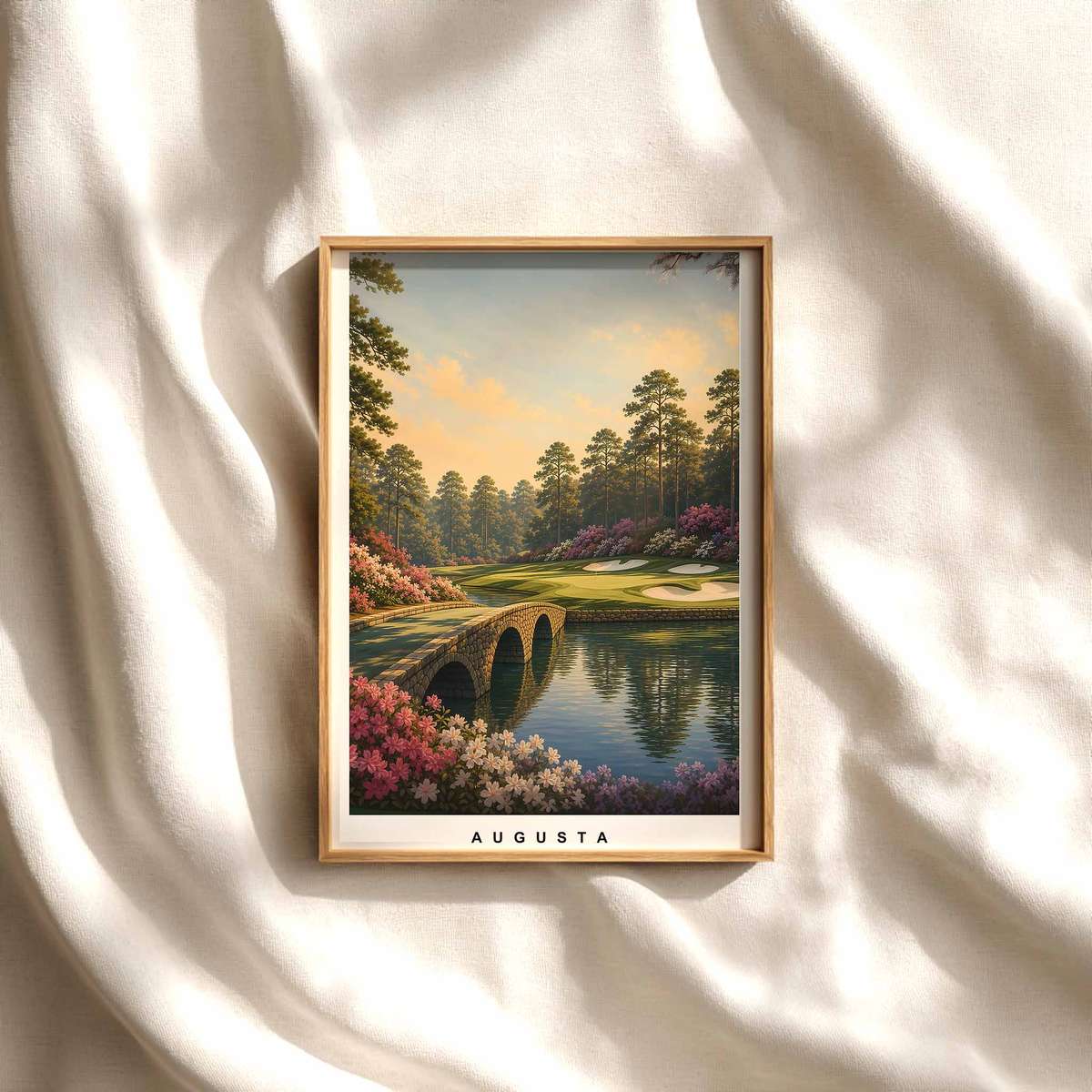 ↧ Digital download
Golf Gift for Men: Augusta National–Style Player Poster as Elegant...
Digital download
↧ Digital download
Golf Gift for Men: Augusta National–Style Player Poster as Elegant...
Digital download
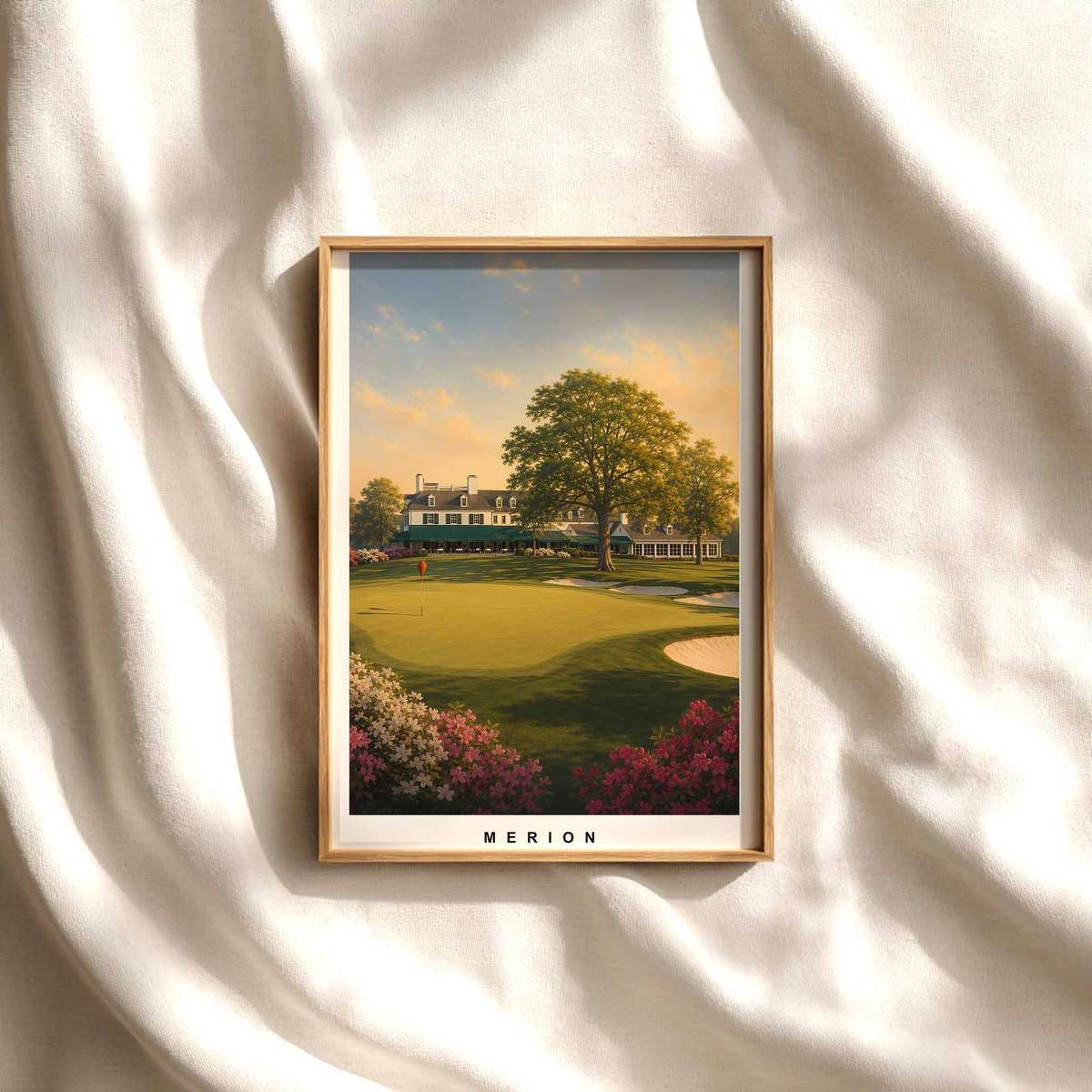 ↧ Digital download
Merion East: Quiet Golf Art for the Study, Clubhouse and Gentleman's...
Digital download
↧ Digital download
Merion East: Quiet Golf Art for the Study, Clubhouse and Gentleman's...
Digital download