Drive In Range: Reading Augusta National’s Routing — Pins, Greens and…
Augusta National is more than a collection of beautiful holes; it is a tightly authored inward garden where pin locations, green scale and slope, and theatrical staging determine how a round plays. This piece reads the course as a journey — how the opening stretch sets tone, where risk and reward sharpen, and why specific holes become championship fulcrums.
Quick answer
Augusta National’s identity is built around very large Bentgrass greens (average ~6,486 sq ft), severe internal contours and deliberately varied pin placements that change strategy hole to hole while the plantings and clubhouse staging create an inward, theatrical championship setting.
What you will learn here
- Why green scale and turf type matter to approach strategy and putting.
- How pin placements turn the same green into different playing holes.
- Where the routing builds pressure (Amen Corner, 16) and how the course releases it.
The opening impression of the routing
From the first holes Augusta frames itself as an inward-facing garden rather than an open landscape test. Early tee shots are presented against a backdrop of pines and planted azaleas that focus attention on precision rather than pure length. The green complexes are unusually large for championship golf; tournament fact sheets record Augusta’s average green size around 6,486 sq ft. That scale gives the club latitude: a green can host multiple distinct hole locations that play like different holes depending on the day’s position of the pin.
The first stretch and its demands
The opening holes establish the round’s rhythm by asking players to consider angles and approach-targeting early. Large Bentgrass surfaces tolerate a variety of shot shapes, but their internal contouring punishes imprecise landings. On several early holes the routing encourages conservative lines into receptive sections of greens; the strategic demand is to find the correct portion of a broad canvas, because being ten feet from a wrong slope can result in a putt that feeds tens of feet away.
The part of the course where its character sharpens
Mid-round, the course tightens its narrative: green contours become more decisive and water features such as Rae’s Creek start to influence club selection and shot shape. This is where the Masters’ staging is most evident — pin placement, green slope and hazard lines are used in combination to convert small positional errors into significant scoring swings. Because greens are both large and highly contoured, tournament pin positions can convert an approachable green into a penal target, forcing players to choose between aggression and prudence.
Signature holes and why they matter
Certain holes act as chapter points in the routing: Amen Corner (holes 11–13) and the 16th green are repeatedly cited as championship-defining because they concentrate risk, angle and green complexity into short sequences. These holes demand shot-shaping, exact approach angles and acute risk management. Their individual features — creek lines, choke points and tiered putting surfaces — mean that decisions on one hole directly affect the next, amplifying pressure across the stretch.

The par-3 and green-complex story
Augusta’s greens are Bentgrass and notable for extreme undulation. Golf writers and technical analyses emphasise that a putt or approach landing ten feet from a hole can roll many tens of feet if placed on the wrong slope. That behaviour is not accidental; the club’s green design and ongoing recontouring allow holes to be reframed through pin selection. Historically, architects and greenkeepers — including early contributions by Perry Maxwell and later recontouring work — have altered greens over time so the greens evolve yet retain their capacity to present distinct strategic options.
The closing stretch and how it builds drama
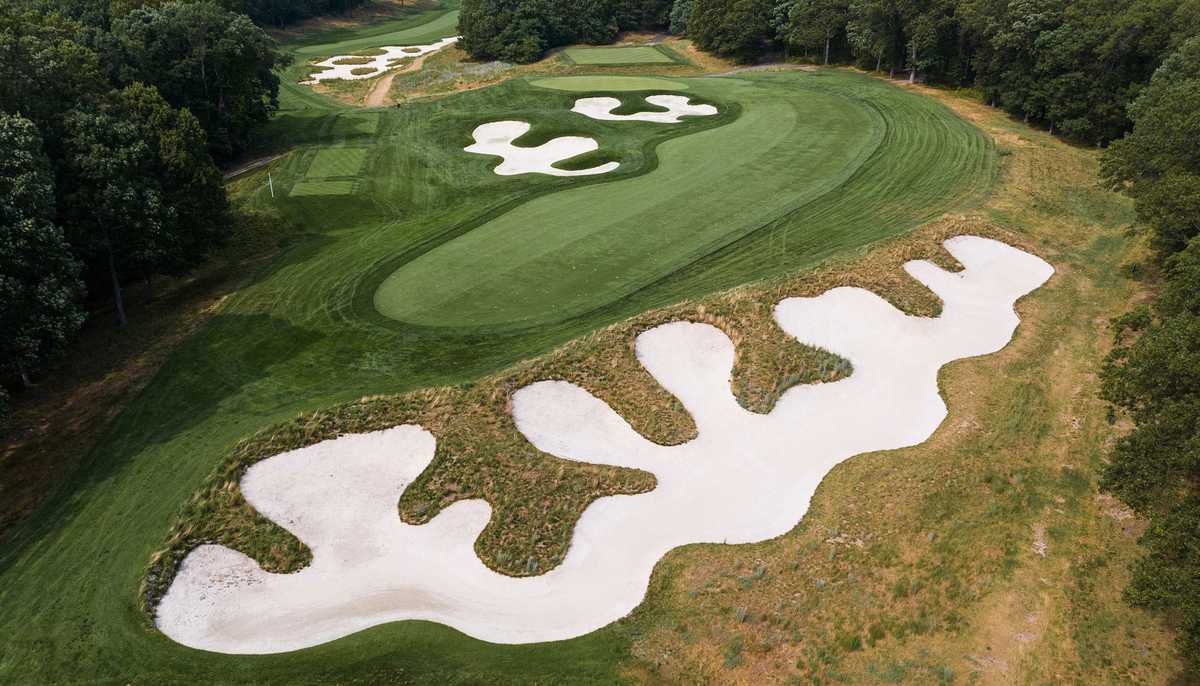
The back nine compacts theatrical moments so the round’s tension accumulates rather than dissipates. Holes with tight approach corridors and steep green shoulders concentrate decision-making late in the round. Because Augusta’s presentation is deliberate — white bunker sand, azaleas, pines and a clubhouse staging that directs visual focus inward — the psychological effect on players intensifies. A poorly placed approach on a large, sloping green can mean a multi-tentative finish; conversely, precise approaches are rewarded with realistic birdie opportunities because the club can move a pin to create an aggressive but testy line.
What the routing reveals about the design
Read as a whole, the routing shows an intention to control scoring through greens and hole locations rather than merely by length. The combination of very large, contoured Bentgrass greens and deliberately staged pin moves enables the club to alter day-to-day strategies. That inward theatricality — reinforced by extensive plantings and named holes — makes Augusta recognisable: it is a course where architecture, landscape and tournament management combine to turn the same physical ground into multiple strategic tests across four rounds.
Why this layout stays in the mind
Augusta’s lasting impression comes from its layered control. Large greens allow variety; severe contours demand respect; pin placement and staging change the lines players must take. The routing is not only a sequence of holes but a curated narrative: it opens with position, sharpens through risky mid-round choices, and finishes by concentrating decisions where they matter most. That is why specific holes — and specific pin moves — can define a Masters week.
Author: Cynthia D.