Reading Pinehurst No. 2: How a Sandy Masterpiece Unfolds on the Golf Range of…
Pinehurst No. 2 is often described in shorthand—pot bunkers, wiregrass, and crowned putting surfaces—but that shorthand misses the real project: a routing that reveals itself as a sequence of visual austerity and demanding positional choice. This piece reads the course as a journey, showing how tee placement, sandy waste areas and those famously sculpted greens combine to force decisions at every stage of the round.
The short version
Pinehurst No. 2’s routing trades traditional length and water hazards for a relentless test of angle, approach line and green-reading. Its character is sand-forward, green-centric and strategically minimalist.
What you will learn here
- How the opening stretch sets an austere tone through sightlines and placement.
- Why the middle holes sharpen demands on shot shaping and club selection.
- How the green complexes dictate strategy more than any single bunker or tree.
The opening impression of the routing
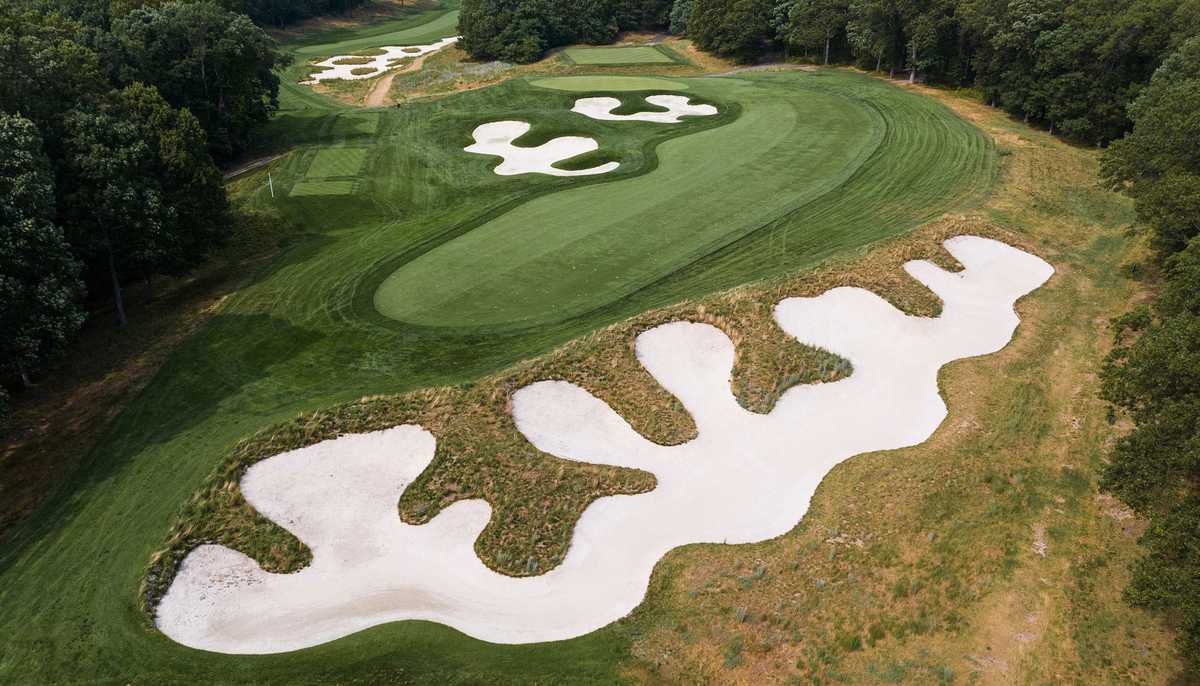
From the first tee Pinehurst No. 2 announces restraint. There is an economy of features: pines framing fairways, expansive sandy waste, and greens that sit like isolated objectives. That economy makes orientation literal—your initial tee shot does more than find fairway; it defines the angle your day will take. Early holes reward positional discipline rather than brute distance, and the visual austerity primes the player to read every slope and grain on the approaches and putts that follow.
The first stretch and its demands
The opening stretch works as an establishing sequence. Tee placement and landing areas are generous enough to invite options, but the real constraints arrive on approach. Pinehurst No. 2’s greens are frequently crowned or sloped, which means a two-shot hole can play like three: a tee that leaves a poor angle often results in a longer, lower-percentage approach and a difficult up-and-down. Early par-4s ask you to pick not only yardage but preferred approach side; the wrong side makes a flat putt into a testing three-putt possibility.
The part of the course where its character sharpens
By the middle of the round the course stops being coy. The sandy waste areas and minimalist bunkering begin to funnel play toward narrower corridors. These holes sharpen the price of error: missing the correct corridor doesn’t always produce a penal shot in the rough, but it almost always leaves an approach from a poorer angle or to the wrong half of a green. The routing here is less about volume of hazards and more about cumulative inconvenience—each imprecise shot compounds the difficulty of the next.
Signature holes and why they matter
Pinehurst No. 2’s signature moments are green-centric. Rather than one showpiece par-3 or a dramatic island green, the course’s memorable holes are those where the green complex and its immediate context reshape strategy. A well-known attribute is the reliance on crowned greens that convert modest misses into demanding recoveries. Because the greens often repurpose subtle slopes and knobbery, the signature holes matter less for headline theatrics and more for how they exemplify the course’s central test: control the approach line and you control scoring opportunity.
The par-3 and green-complex story
Par-3s at No. 2 are compact essays in green-reading. Their yardages and visual simplicity hide complex fall lines and subtle pin-protecting shelves. Across the course the greens favor downhill chips from tight pin positions, and many have pronounced crowns that penalize even well-struck shots if they land on the wrong slope. Understanding the green complexes—how a back-left pin invites ball flight that lands short and releases, or how a front-right pin will punish any shot that ignores slope—becomes the central arithmetic of a round here.
The middle of the round and its decisions
Mid-round holes demand choices about risk and release. There is often a clear trade: attack the flag and accept a run-off or lay back to a safer side that gives a straighter, shorter putt. Because recovery shots from sandy waste are rarely straightforward, the correct play usually involves thinking one shot ahead—evaluate what your approach must do, not just where your drive will land. That forward-thinking is a recurring lesson in Pinehurst No. 2’s sequencing; the routing rewards anticipation.
The closing stretch and how it builds drama
The finish at No. 2 is not a crescendo of forced risk but a disciplined tightening. Closing holes often repeat the course’s two central themes—precise approach angles and capricious greens—but with the added pressure of cumulative scoring. Late holes will expose earlier positional errors. Where some layouts ask for late heroics, No. 2 typically demands steadiness: keep lines correct, and the greens allow you to score; drift, and the greens make recovery expensive. That measured drama—where the green complexes deliver the verdict—is the course’s final impression.
The course as a complete journey
Viewed end-to-end, Pinehurst No. 2 is a study in restraint and revelation. The routing doesn't need constant visual fireworks because the primary hazard is the landform itself: sand, subtle slope and the pines’ choreography of sightlines. The journey teaches a single, consistent lesson—your score will be governed by angles and the quality of your short game—delivered through a sequence of green complexes that steadily escalate the requirement for precision.
Why this layout stays in the mind
No. 2 lingers because its tests are memorable in an intellectual way. The course forces you to think about the shape of shots, the release of approaches, and how one positional choice changes the next. Its identity is not merely aesthetic; it is functional. When the round is over, what remains are clear tactical memories: a putt that broke away because a crown was misread, an approach that rolled off a shelf, the decision to favor one side of a fairway for a shorter window to the flag. Those precise experiences are why the routing endures in players’ minds.
What defines it
Pinehurst No. 2 is defined less by dramatic hazards than by a routing that makes every tee shot and approach count. Greens are the final arbiter: position, not power, governs success.
Author: Eric M.