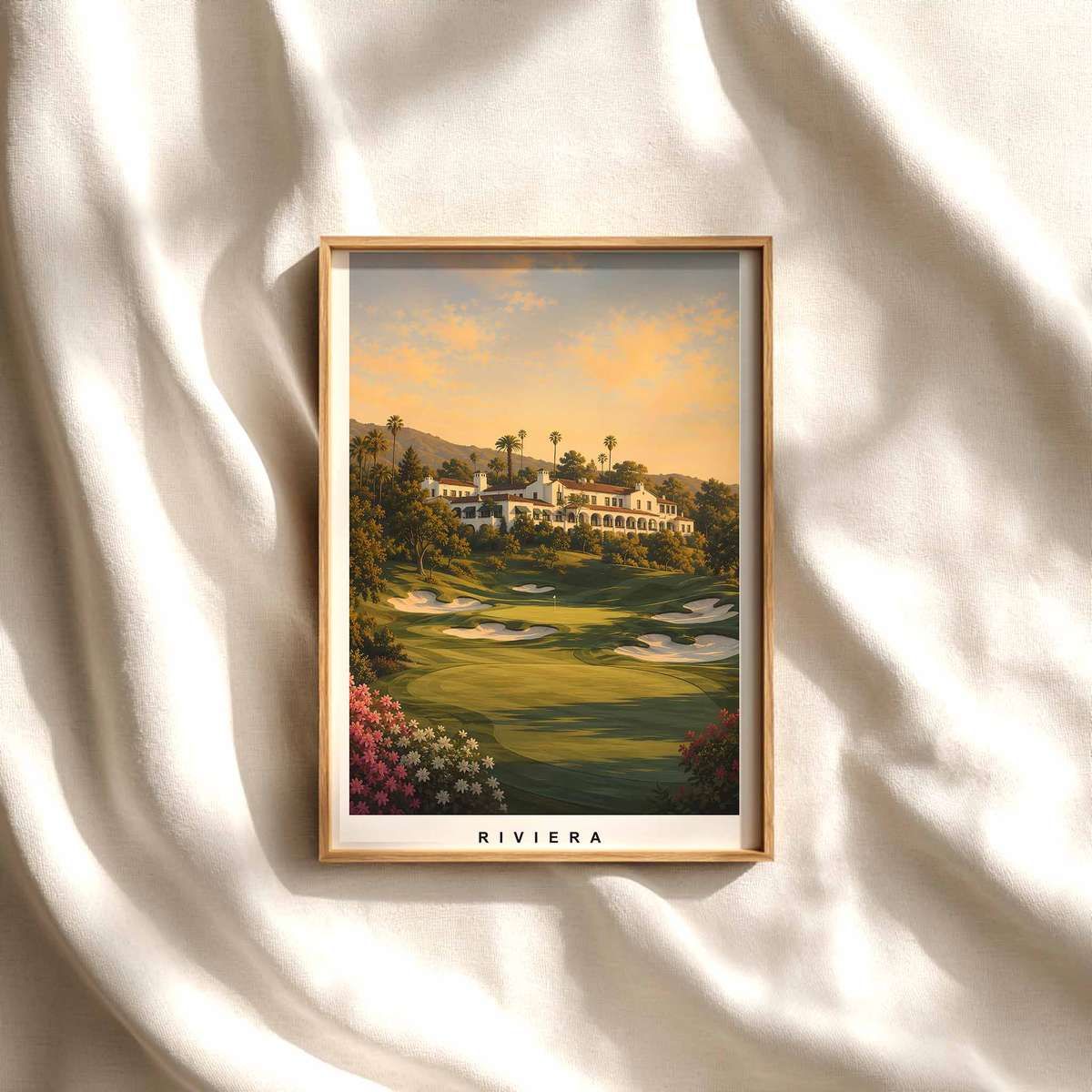
Cypress Point Club poster: The Course as Place — Cypress, Dunes and Coastal Presence…
There are golf images that record a moment and there are images that summon a place. The view of Cypress Point Club that matters for wall art belongs to the second kind: a composition where cypress trunks, sculpted dunes and dramatic coastal ruptures do more than frame holes — they create a sustained atmosphere. Hung in a study or living room, such a print becomes a quiet architecture of mood, anchoring a space with natural order and a light that seems to inhale and hold the room.
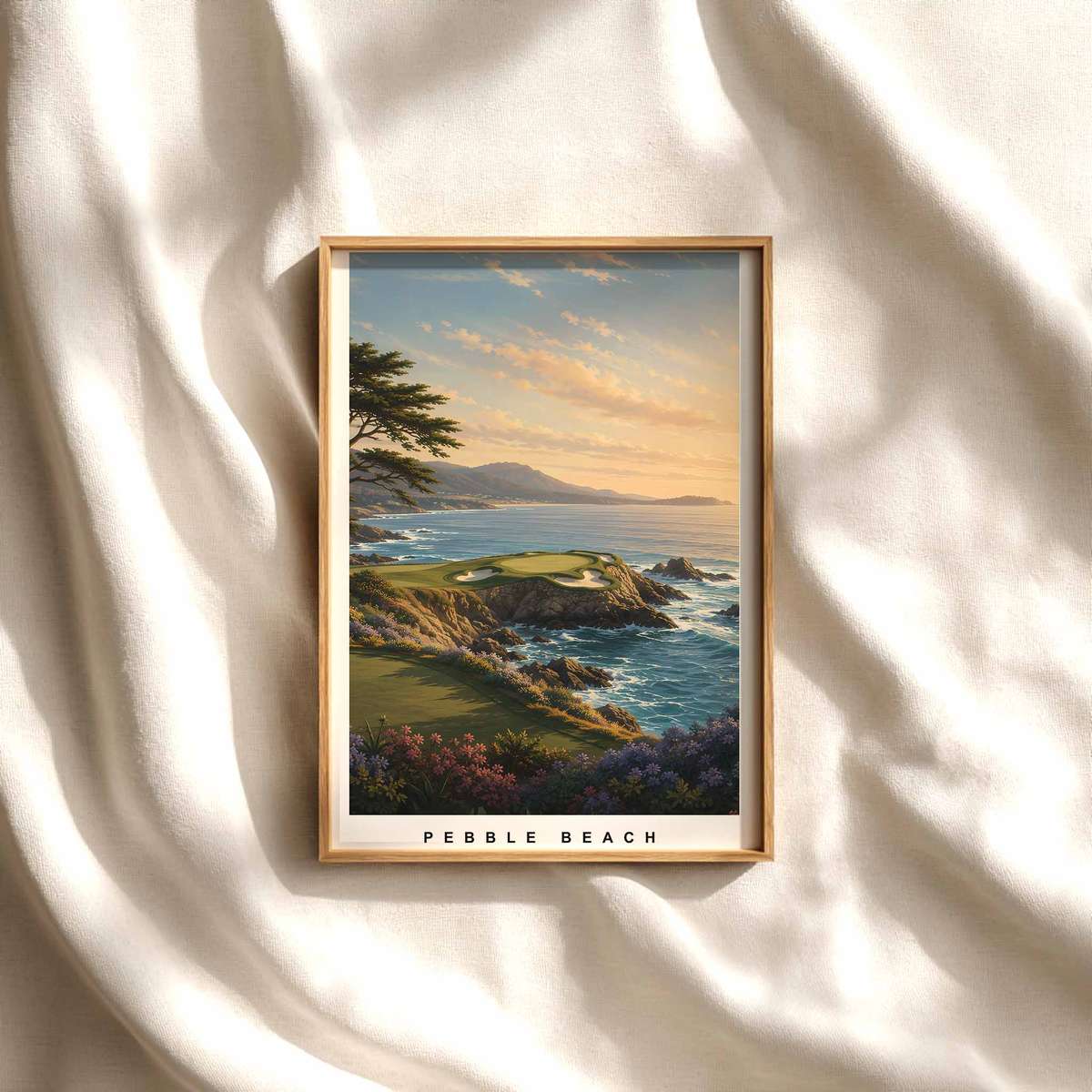
The strength of this imagery is its clarity of form. Tall, wind-sheared cypress stand like calligraphic marks against a broad horizon; dune crests fold into soft shadow and the shoreline breaks in abrupt, mineral cliffs. Together these elements give an image structural rhythm: vertical accents, horizontal calm, and diagonal lines where fairway meets coast. That rhythm reads at a glance from across a room, giving a piece on the wall the visual discipline of an abstract painting while remaining unmistakably landscape.
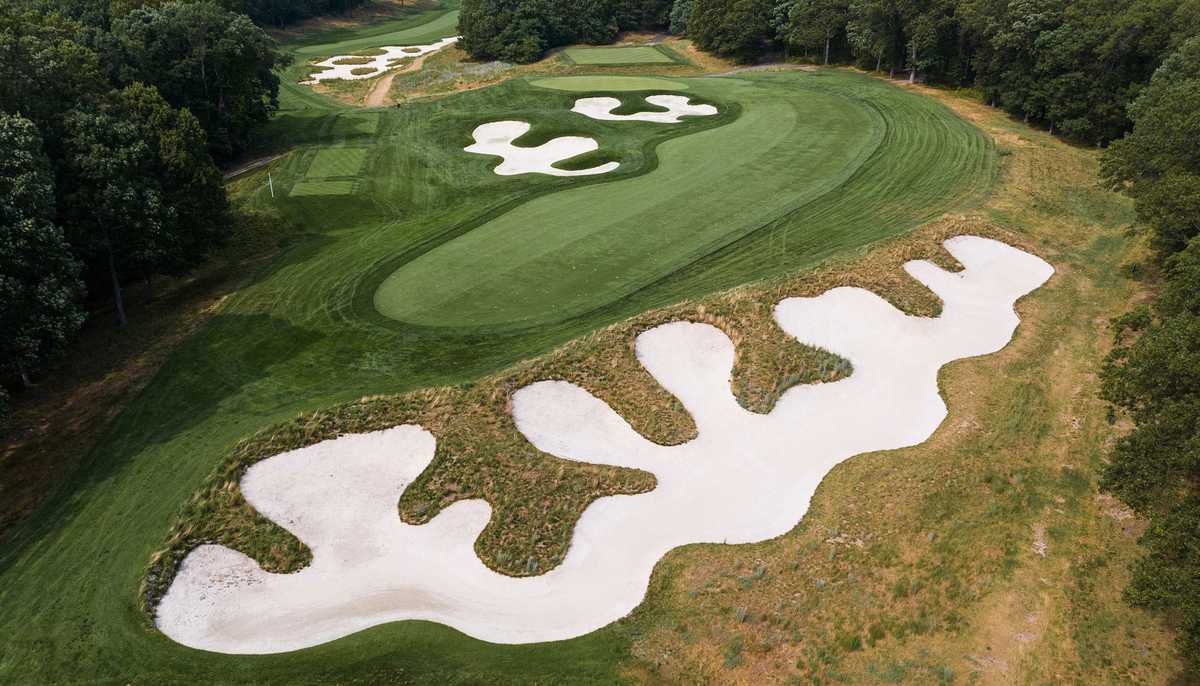
Texture is equally important. Greens and fairways appear as velvety planes that hold light differently from the rougher, sand-dusted dunes. Those differences in surface — the satin of closely cut turf, the grain of wind-blown grasses, the raw edge of rock against sea — translate into depth on a print. A well-made reproduction will keep these tactile cues, so the viewer senses not only distance but material: the soft pull of a fairway into a green, the brittle edge of scrub, the dense bark of the cypress.
Light at Cypress Point is a silent narrator. Morning sun softens the landscape into layered tones; afternoon glare sharpens the cliff edges into graphic shapes. In either light the scene remains composed, never cluttered. This controlled luminosity is why such images work so naturally in refined interiors — they bring a calm clarity without overwhelming color or movement. A print reproducing that light introduces a consistent mood that complements leather, linen or muted paint, quietly lifting the room’s atmosphere.
Importantly, the course-as-place image removes the need for action to create meaning. No players are required for the image to feel alive; instead, presence comes from place itself. The solitary cypress, the sweep of a dune, the way the fairway curves toward the sea all suggest stories — time, wind, ongoing weather — without narrating a single event. That restraint is what allows golf wall art to be both evocative and easy to live with: it invites reflection rather than demanding attention.
For interiors, this kind of print performs several decorative roles at once. It establishes a horizon line that can visually expand a small room, it provides a focal point whose palette is drawn from nature rather than design trends, and it offers a compositional calm that pairs well with both contemporary minimalism and classic clubroom finishes. The scene’s inherent distance — the way foreground elements lead the eye toward the sea — gives the eye a place to rest, which is rare and valuable in domestic spaces saturated with detail.
Choosing a Cypress Point Club image for a poster is therefore an exercise in selecting a mood as much as a landscape. Look for reproductions that preserve the subtle contrasts of texture, the sculptural presence of trees, and the coastal light that defines form. Framed simply, such a print becomes a long-lasting companion in a room: a quiet reminder of place, a discipline of form, and a steady point of visual calm.
The poster works best where calm, depth and true presence are wanted—over a desk, above a mantle, or in a corridor where the view can be discovered slowly.